1140 CHAPTER 33. FOURIER ANALYSIS IN Rn
Then changing the variables in 33.4.48,,
∫3π|y|−1<|x|≤R
Kε (x)e−ix·ydx
=12
∫3π|y|−1<|x|≤R
Kε (x)e−ix·ydx
−12
∫3π|y|−1<|x−z|≤R
Kε (x− z)e−ix·ydx.
Thus
∫3π|y|−1<|x|≤R
Kε (x)e−ix·ydx =
12∫|x|≤R
Kε (x)e−ix·ydx− 12
∫|x−z|≤R
Kε (x− z)e−ix·ydx
+ 12
∫|x−z|≤3π|y|−1
Kε (x− z)e−ix·ydx− 12
∫|x|≤3π|y|−1
Kε (x)e−ix·ydx.
(33.4.49)
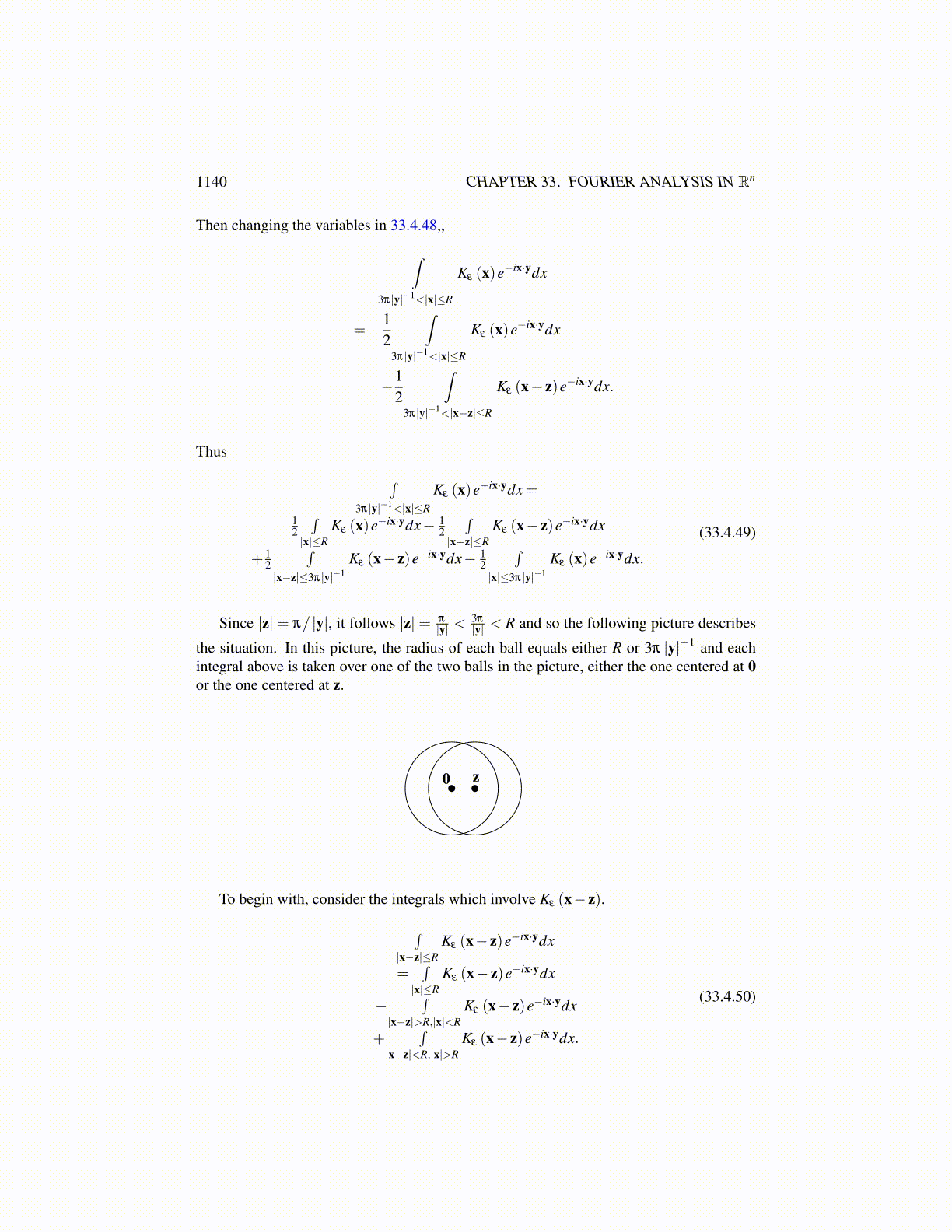
Since |z| = π/ |y|, it follows |z| = π
|y| <3π
|y| < R and so the following picture describes
the situation. In this picture, the radius of each ball equals either R or 3π |y|−1 and eachintegral above is taken over one of the two balls in the picture, either the one centered at 0or the one centered at z.
0 z
To begin with, consider the integrals which involve Kε (x− z).
∫|x−z|≤R
Kε (x− z)e−ix·ydx
=∫|x|≤R
Kε (x− z)e−ix·ydx
−∫
|x−z|>R,|x|<RKε (x− z)e−ix·ydx
+∫
|x−z|<R,|x|>RKε (x− z)e−ix·ydx.
(33.4.50)