974 CHAPTER 27. ORLITZ SPACES
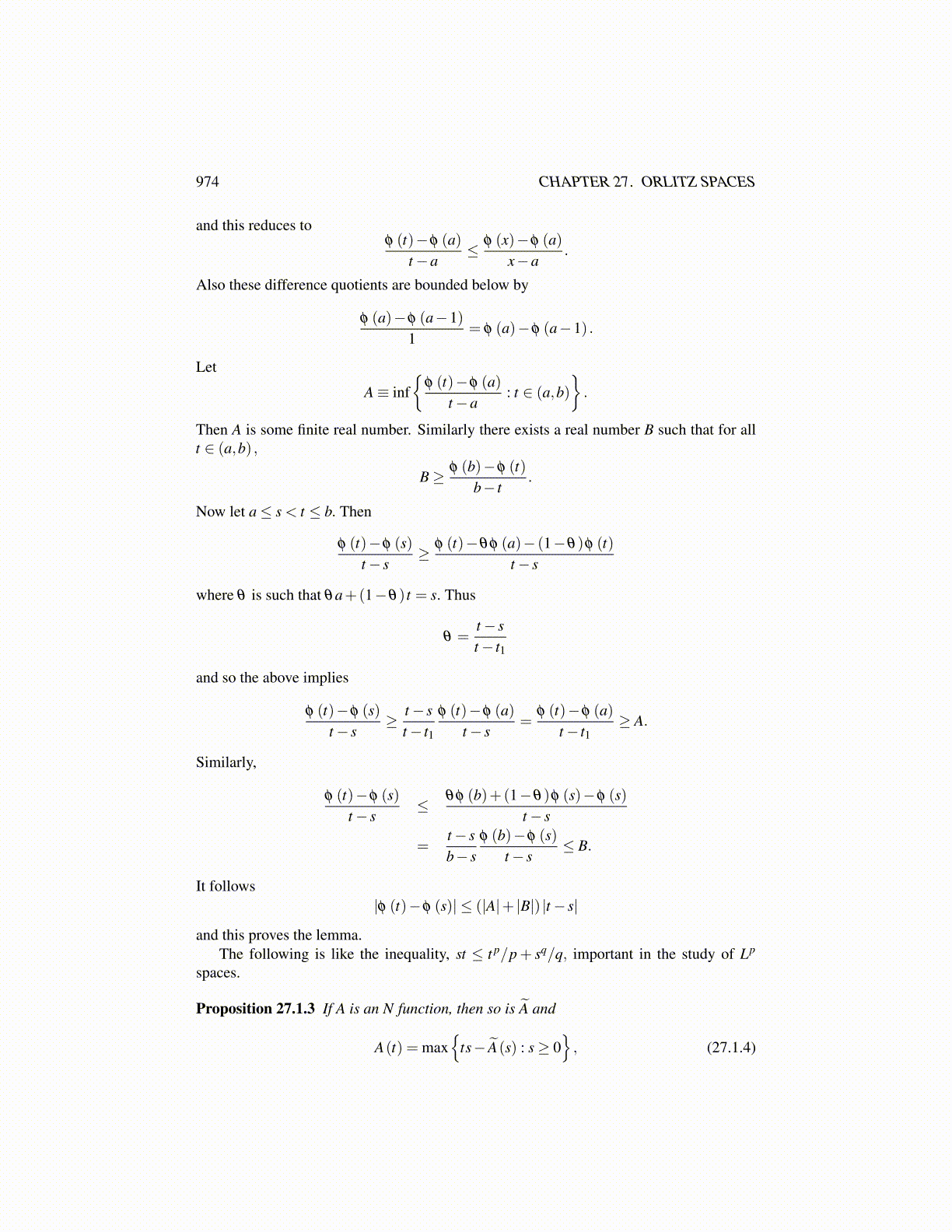
and this reduces toφ (t)−φ (a)
t−a≤ φ (x)−φ (a)
x−a.
Also these difference quotients are bounded below by
φ (a)−φ (a−1)1
= φ (a)−φ (a−1) .
Let
A≡ inf{
φ (t)−φ (a)t−a
: t ∈ (a,b)}.
Then A is some finite real number. Similarly there exists a real number B such that for allt ∈ (a,b) ,
B≥ φ (b)−φ (t)b− t
.
Now let a≤ s < t ≤ b. Then
φ (t)−φ (s)t− s
≥ φ (t)−θφ (a)− (1−θ)φ (t)t− s
where θ is such that θa+(1−θ) t = s. Thus
θ =t− st− t1
and so the above implies
φ (t)−φ (s)t− s
≥ t− st− t1
φ (t)−φ (a)t− s
=φ (t)−φ (a)
t− t1≥ A.
Similarly,
φ (t)−φ (s)t− s
≤ θφ (b)+(1−θ)φ (s)−φ (s)t− s
=t− sb− s
φ (b)−φ (s)t− s
≤ B.
It follows|φ (t)−φ (s)| ≤ (|A|+ |B|) |t− s|
and this proves the lemma.The following is like the inequality, st ≤ t p/p+ sq/q, important in the study of Lp
spaces.
Proposition 27.1.3 If A is an N function, then so is à and
A(t) = max{
ts− Ã(s) : s≥ 0}, (27.1.4)